Loading...
Serving Fort Lauderdale, FL and surrounding areas. (754) 283-8518
You want a deck that looks warm and natural - not plastic. Cedar gives you that look, and we build it to handle Fort Lauderdale's humidity, salt air, and storm season.
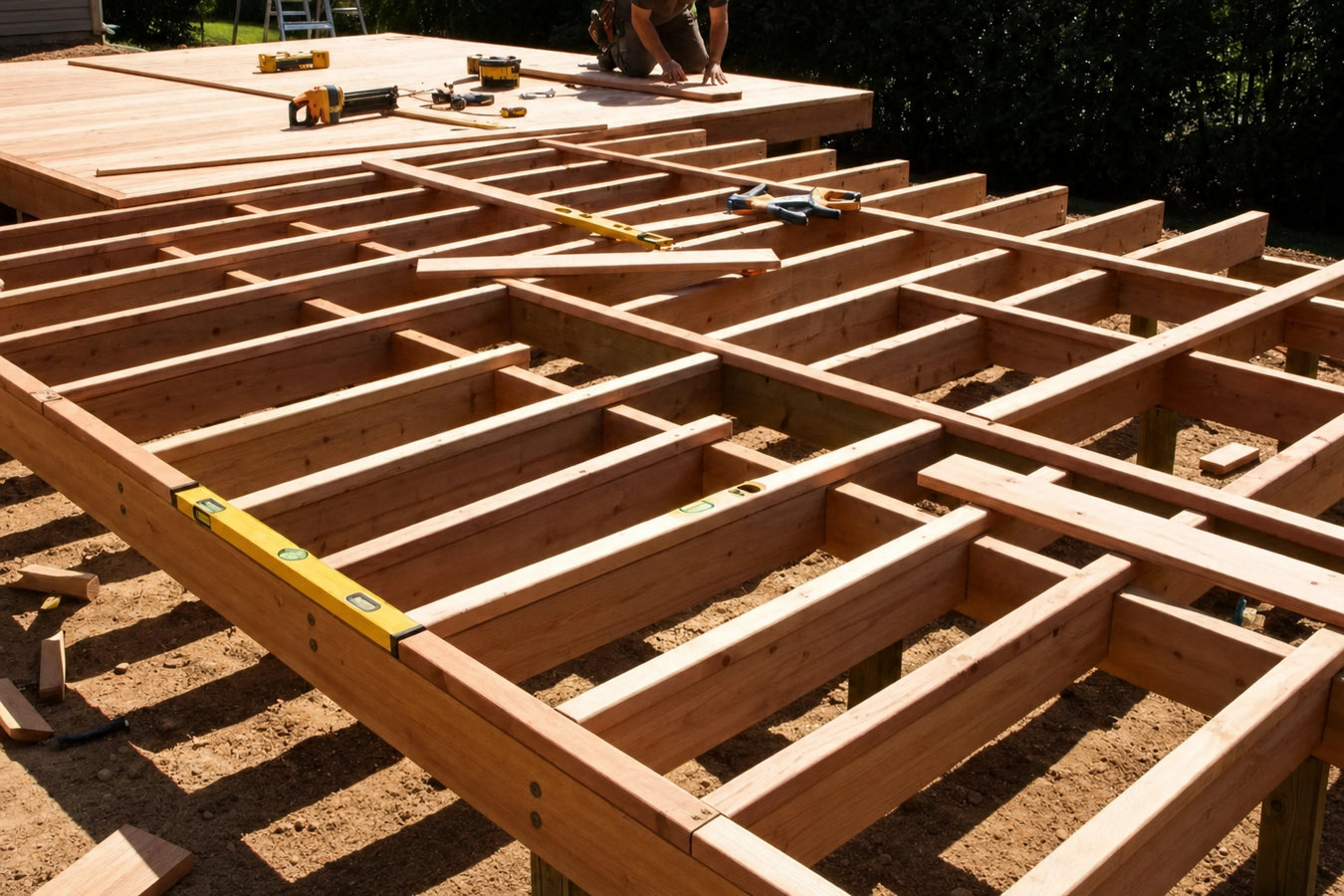
Cedar wood deck construction in Fort Lauderdale means building a custom outdoor deck using naturally rot-resistant cedar lumber, most projects take four to eight weeks from contract to final inspection, including the permitting process with the City of Fort Lauderdale or Broward County.
Cedar has been a go-to choice for outdoor decks for good reason. The wood contains natural oils that resist moisture and insects without chemical treatment - a real advantage in South Florida where humidity rarely drops below 70%. If you are weighing your material options, our deck repair and replacement page covers what happens when a deck reaches the end of its life - good context if you are replacing an older structure.
Every cedar deck we build in Fort Lauderdale is permitted, inspected, and framed to meet Broward County wind-load requirements. The structural frame - posts, beams, and joists - gets as much attention as the cedar boards on top, because the frame is what determines whether your deck is safe five years from now, not just on completion day.
If you walk across your existing deck and certain boards give slightly under your weight, the wood beneath has likely started to rot. Fort Lauderdale's humidity accelerates this process, and a soft spot is a safety concern - not just cosmetic damage. What looks minor on the surface often points to a bigger problem underneath.
Fort Lauderdale's weather makes outdoor living possible year-round, but many older homes were built without a defined outdoor space. If you find yourself wanting to entertain or relax outside but your backyard has no comfortable area to do it, a cedar deck is the most direct way to create one.
Boards that have warped, twisted, or started pulling away from the frame are telling you the deck has run its course. In South Florida's climate, wood that has gone years without proper sealing often deteriorates faster than in cooler regions - and at a certain point, repairs cost more than starting fresh.
Dark staining, green algae, or a musty smell coming from your deck points to moisture and salt penetration - common in Fort Lauderdale neighborhoods near the Intracoastal Waterway or the coast. Surface cleaning does not fix compromised structure, and the framing beneath the boards may already be weakened.
We build cedar decks from the ground up - from initial design and permit application through final city inspection. Every project starts with a site visit where we measure your space, discuss how you plan to use the deck, and walk you through your options for size, shape, railing style, and cedar grade. If you want a more budget-conscious approach, we also build with pressure-treated wood, which handles Fort Lauderdale's moisture well and costs less upfront.
Cedar comes in different grades - clear and select grades have fewer knots and a cleaner appearance, while common grades are more affordable and have more natural character markings. We will explain the difference and quote the grade that fits your goals. All cedar decks we build use stainless steel or hot-dipped galvanized fasteners to resist the corrosion that standard steel hardware develops quickly in South Florida's coastal environment.
Suits homeowners who want a simple, low-maintenance outdoor living area close to grade - ideal for yards with minimal elevation change.
Suits homes with a raised entry, sloped yard, or second-floor access - built on a post-and-beam frame anchored in concrete footings.
Suits homeowners who want a seamless connection from the house to the deck, with the ledger board properly flashed and waterproofed to prevent water intrusion.
Suits homeowners whose home structure, HOA rules, or site conditions make a freestanding platform a better fit than an attached design.
Fort Lauderdale sits in a subtropical climate where humidity averages above 70% and salt-laden air is a daily reality for neighborhoods near the Intracoastal Waterway and the coast. This environment is harder on wood than almost anywhere else in the country. A cedar deck built here needs the right sealant from day one, stainless or galvanized fasteners throughout, and structural connections designed to meet Broward County wind-load requirements. A contractor who ignores these specifics is building for a climate that does not exist here. Learn more about our work in Pompano Beach and Coral Springs, where homeowners face similar conditions.
Unlike most of the country, Fort Lauderdale homeowners use their outdoor spaces in every month of the year. A cedar deck is not a seasonal project - it is a functional extension of your living space that gets daily use from January through December. The best time to build is during the dry season, roughly November through April, when rain delays are less likely and permit offices are less backlogged. Planning your project in September or October puts you in a good position to start construction before the summer rainy season.
Call or submit a form and we will respond within one business day. We ask a few basic questions - deck size, how you plan to use the space, whether you have an HOA - so the site visit is productive rather than a cold start.
We come to your property, measure the space, check site conditions, and discuss your options. You will receive a written estimate that includes permits, materials, and labor - no hidden line items added later.
Once you sign, we submit the permit application to the City of Fort Lauderdale or Broward County. This takes one to three weeks on average. You do not need to manage any paperwork - we handle it from start to final inspection.
The crew sets posts and framing first, then installs the cedar boards and railings. A city inspector verifies the finished deck before we call the project complete - you will have a closed permit in hand for your records.
Free estimate, no pressure. We handle permits and work to your schedule.
(754) 283-8518We manage the entire permit process with the City of Fort Lauderdale or Broward County - from application through final inspection sign-off. Your deck will not be considered complete until a city inspector has approved it and you have a closed permit for your records.
Standard steel screws and joist hangers corrode in Fort Lauderdale's salt air within a few years. We use stainless steel or hot-dipped galvanized hardware throughout every cedar deck we build - the same specification recommended by the North American Deck and Railing Association for coastal environments.
Broward County falls within Florida's wind-load requirements for deck construction. Every structural connection on your deck - post anchors, beam hangers, ledger attachment - is specified and installed to meet those requirements, not just minimum IRC baseline.
We have worked in HOA-governed neighborhoods throughout Fort Lauderdale and know how to prepare plans that get approved the first time. We will walk you through what your HOA is likely to require before finalizing any design, so you are not redesigning after the fact.
Every one of those points connects to the same thing: a deck that holds up in Fort Lauderdale's actual conditions, not just on the day it is built. Cedar is a beautiful material when it is used and maintained correctly - and we make sure both parts of that equation are covered.
Cedar grading standards are maintained by the Western Red Cedar Lumber Association. Florida contractor licensing is verified through the Florida DBPR.
When an existing deck has reached the end of its life, we assess what can be saved and what needs to go - then rebuild to current code.
Learn MoreA budget-friendly wood alternative to cedar that handles Fort Lauderdale's moisture well and takes stain and sealant easily.
Learn MorePermit slots fill up heading into dry season - reach out now to lock in your start date and get a written estimate with no obligation.